The Day Lasts More Than a Thousand Sunsets
2023-2025
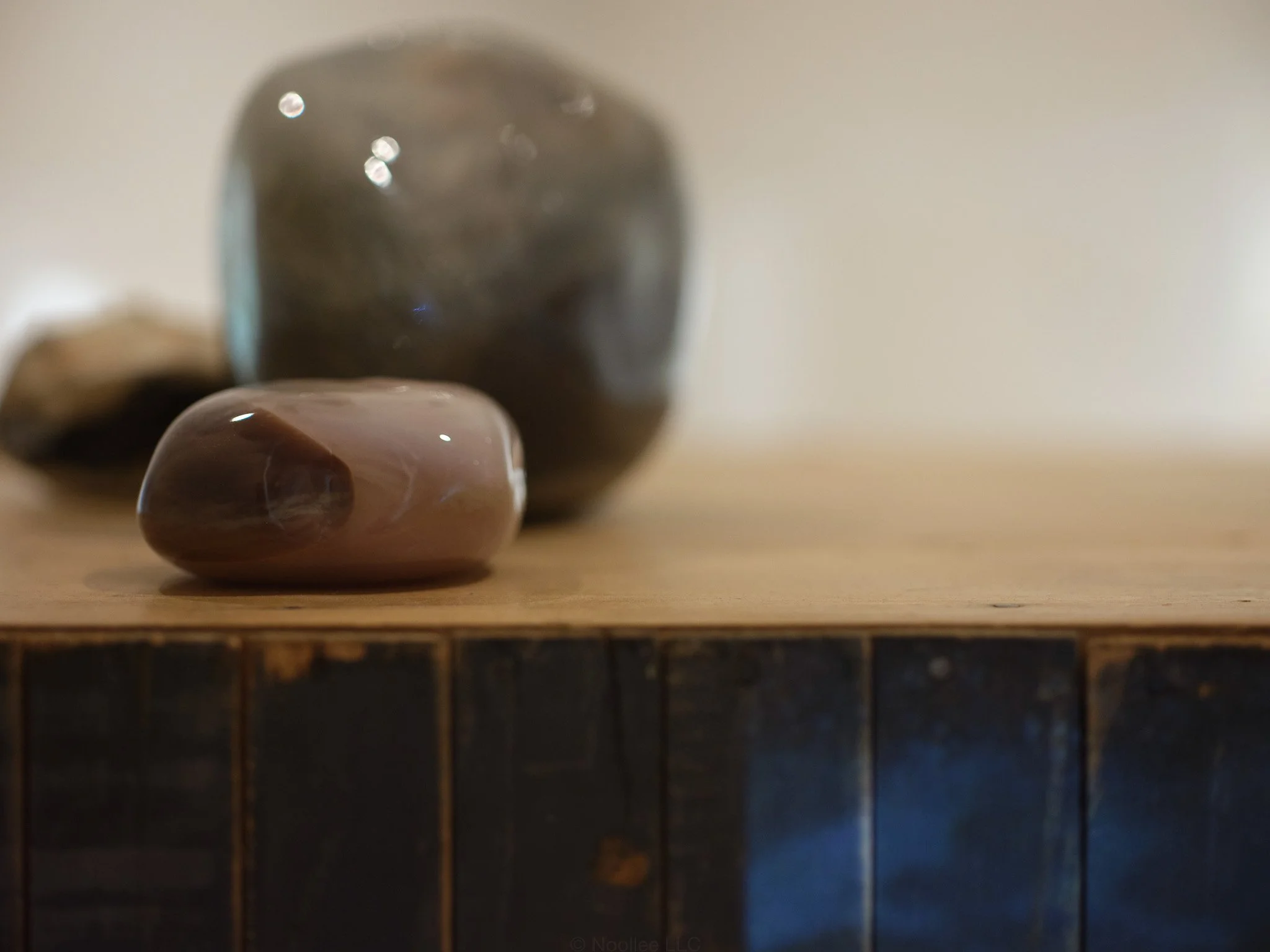
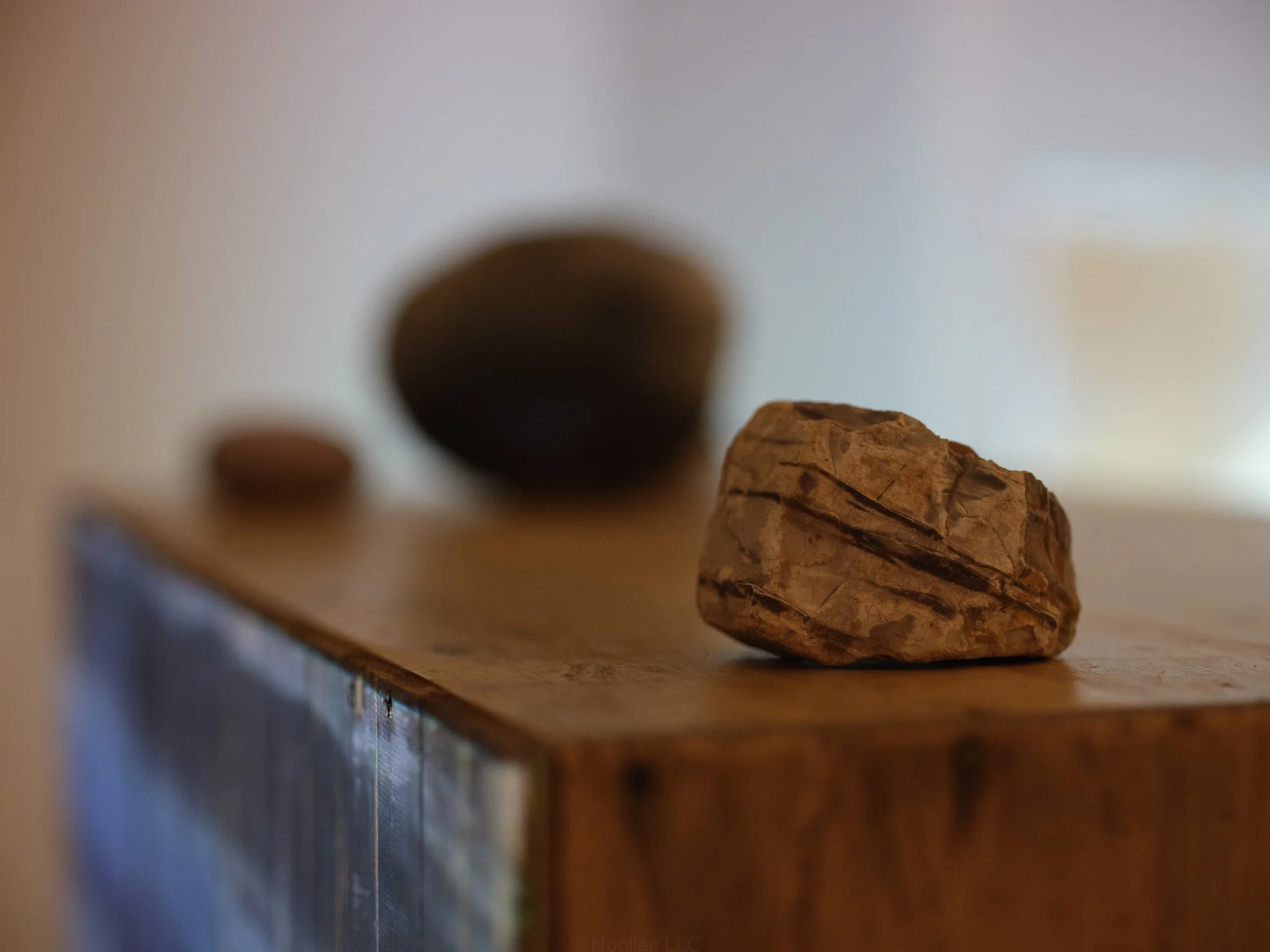
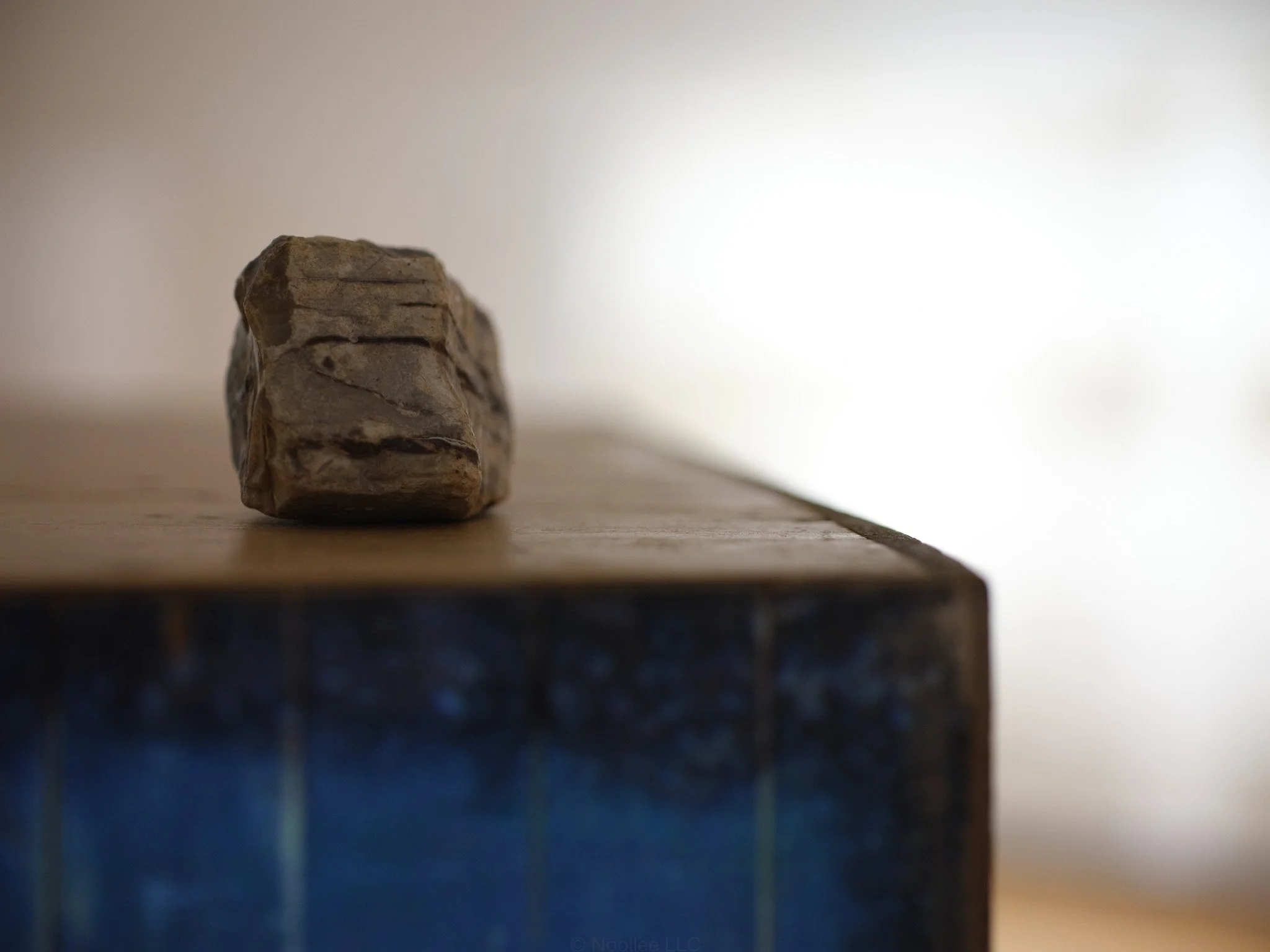
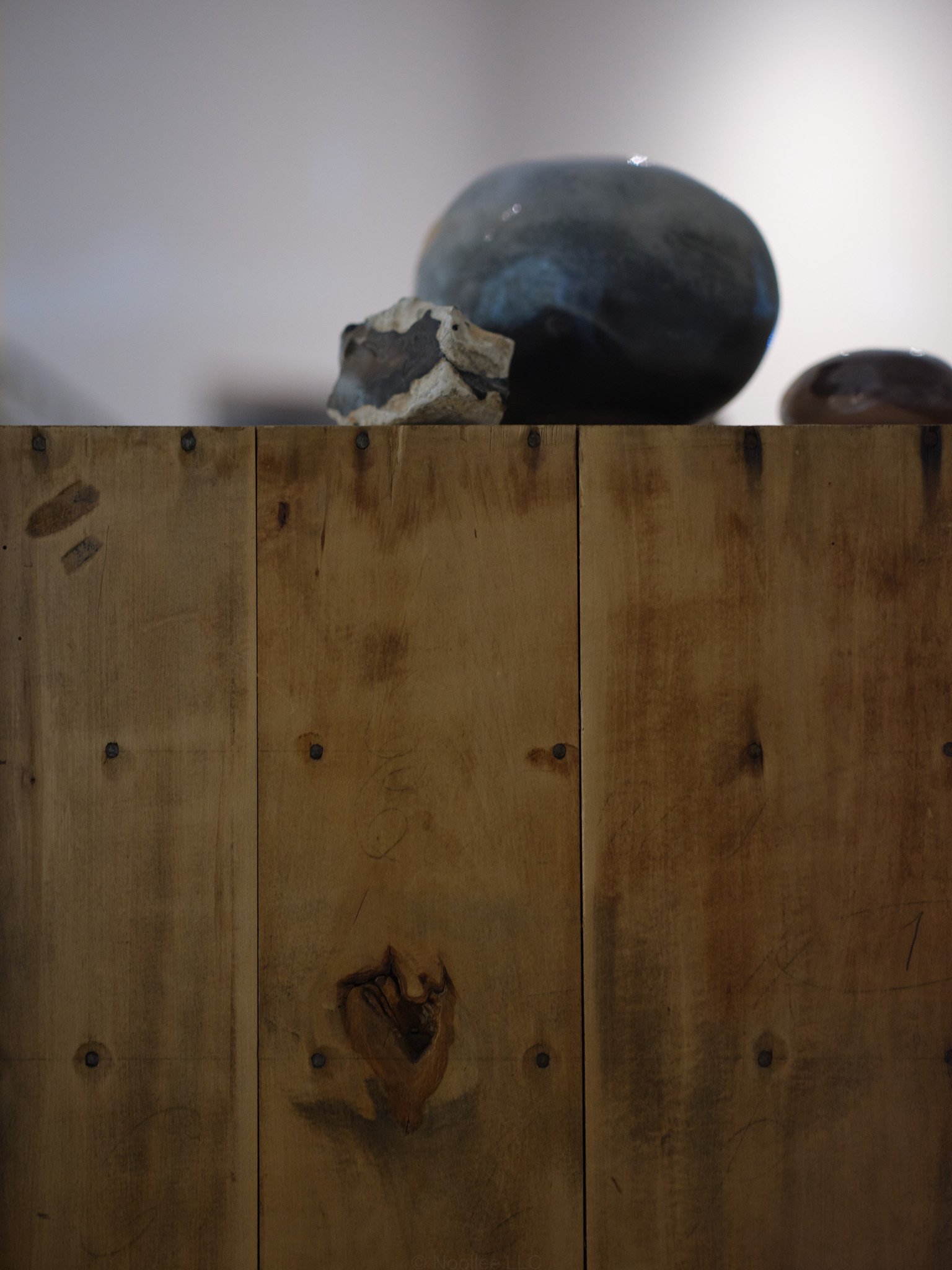
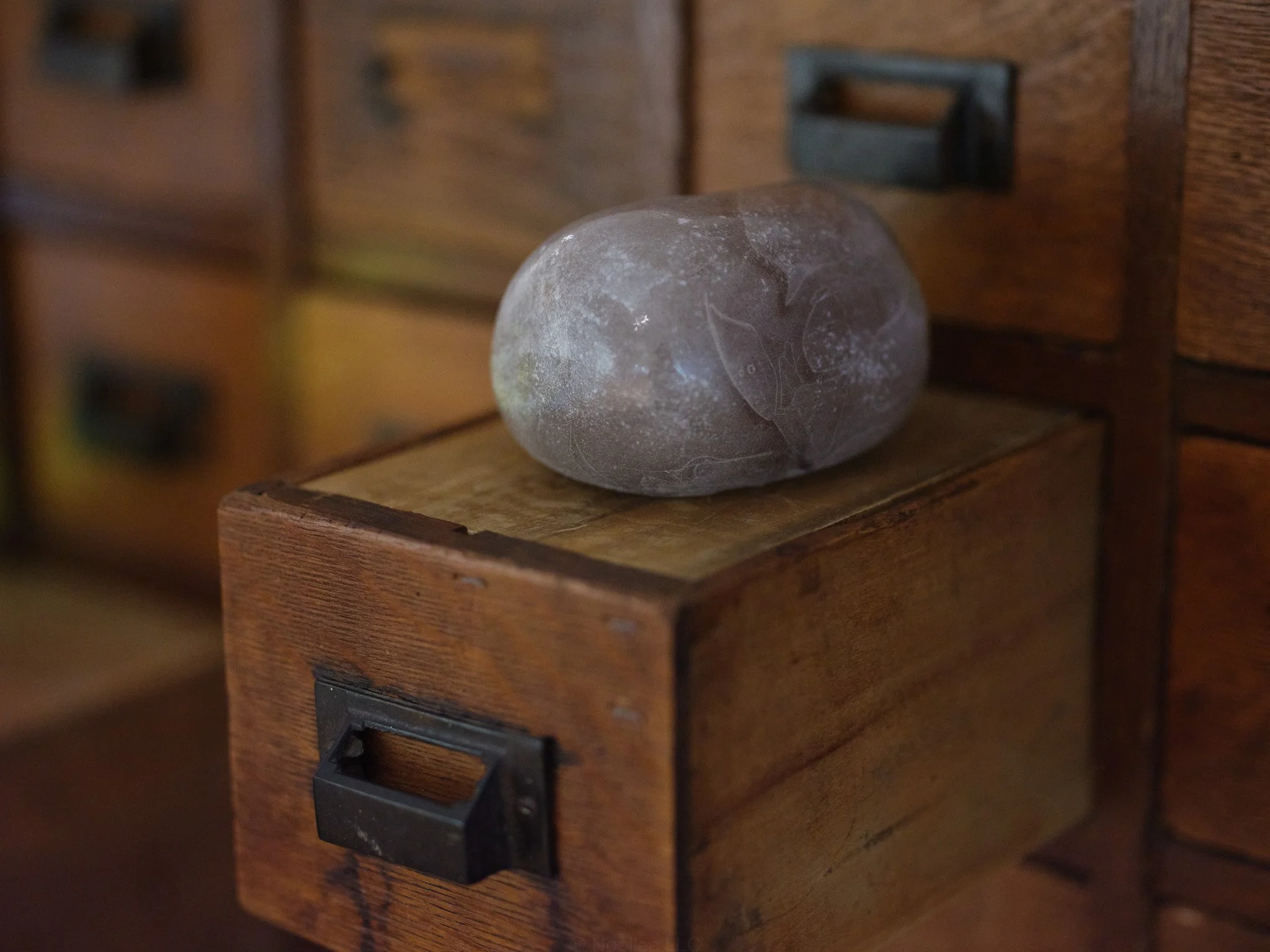
Glass, rocks from Israel, vintage furniture, hand made recycled denim, cotton and abaca paper , digital and electrical components, magnets, three channel video projections presented in infinite loop, sound.
The artwork was created in the glassblowing studio at Englewood Arts with artists Swede (Phillip Hickok), Kevin Miller, Payton Koranek and Cole Kennedy.
Acknowledgments: Michael Baxley,, Patricia Uhlmann, Elia & Ben Stern
Images by T. Maxwell Wagner at the MoA+L, Manhattan, KS
Selections from this body of work are currently on view as part of the exhibition Afterimage at the Museum of Art + Light in Manhattan, KS.
A Day Lasts More Than a Thousand Sunsets transforms an antique filing cabinet from a symbol of institutional memory into a porous archive of lived experience. Inspired by the act of historical research, the multimedia installation layers materials commonly found in archives, such as paper, glass, and video, to evoke the rhythms of ocean waves and coastal light.
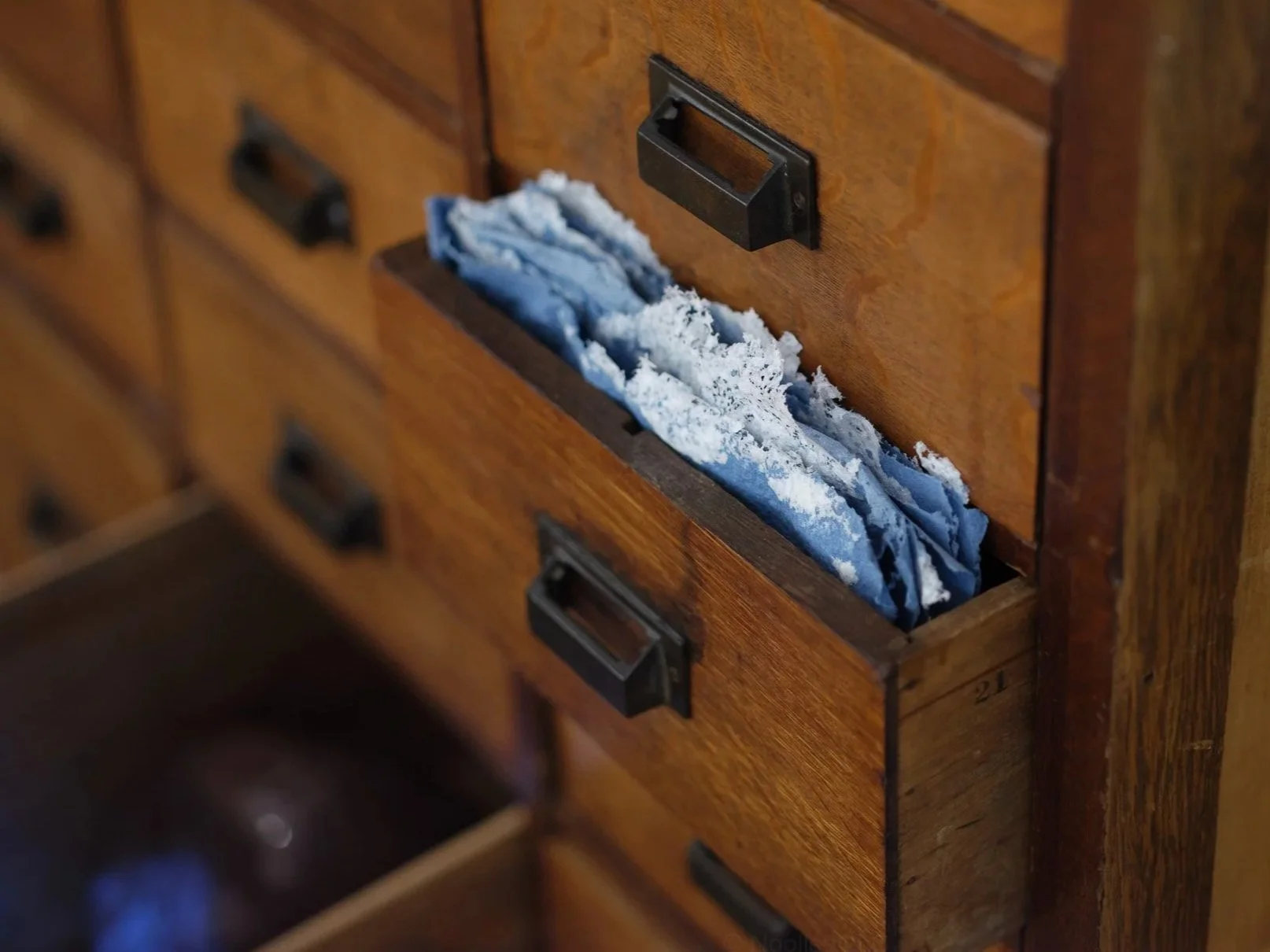
In the lowest middle drawer, continual waves break against the shore, suggesting an oceanic archive that is vast, rhythmic, and alive. On the front of the cabinet, a drawer holds handmade indigo paper made from the fibers of recycled denim once worn, used, and discarded. Shaped into a wavelike form, the paper stands in for the anonymous bodies that constitute history, those who labored, endured, and shaped the world without being named.
At eye level, a stone-shaped glass object contains moving images of two anglers casting their lines from a rocky pier near the city of Haifa. Their relationship remains ambiguous: they may be friends, strangers, or reflections of one another. Around the back of the cabinet, flickering sunsets filmed along the Israeli coastline trace cycles of time, loss, and recurrence.
The work contrasts bureaucratic order with natural patterns, proposing memory as an organic and unstable entity: shaped by repetition, carried through materials and gestures, and gradually eroded by time.

The title of the artwork draws on Chingiz Aitmatov’s novel The Day Lasts More Than a Hundred Years, in which myth, memory, and expansive historical time collapse into a single day of lived experience. In a similar way, the work speaks to how history is composed of countless personal micro-moments, whether painful or thrilling, that can distort or deepen the shape of time.
In the image-saturated digital world, the sunset has become a kind of visual cliché, a cross-cultural symbol of beauty and closure. Photographs and videos of sunsets are endlessly captured and shared globally. They form a collective, daily practice that acknowledges impermanence: a quiet rehearsal of endings. As such, observing sunsets operate as an informal and ubiquitous human ritual, fleeting and common, yet quietly monumental.
Though not directly visible in the artwork, the sunsets are absorbed into its logic, becoming part of a larger structure that operates as an archive not of power or control, but of fleeting experience. The work functions as a temporal archive, one that does not store official documents but gathers experiential time: sunsets, waves, gestures, and residual traces of lived presence.
Through this piece, memory is not only preserved, but embodied. The filing cabinet, once a closed system, is opened as a breathing, leaking, illuminated entity, releasing the rhythms of the sea and time itself.